Measurement Types
Last updated: September 16, 2026
There are different ways to collect data in Alpaca Health.
The measurement type can not be set at the program and target level. During a session, RBTs enter data on each target (live, or afterward via the session note's Collected Data tab), and each entry becomes a data point on the target's graph.
Below is an example of how you or your RBT can collect data for each measurement type during session.
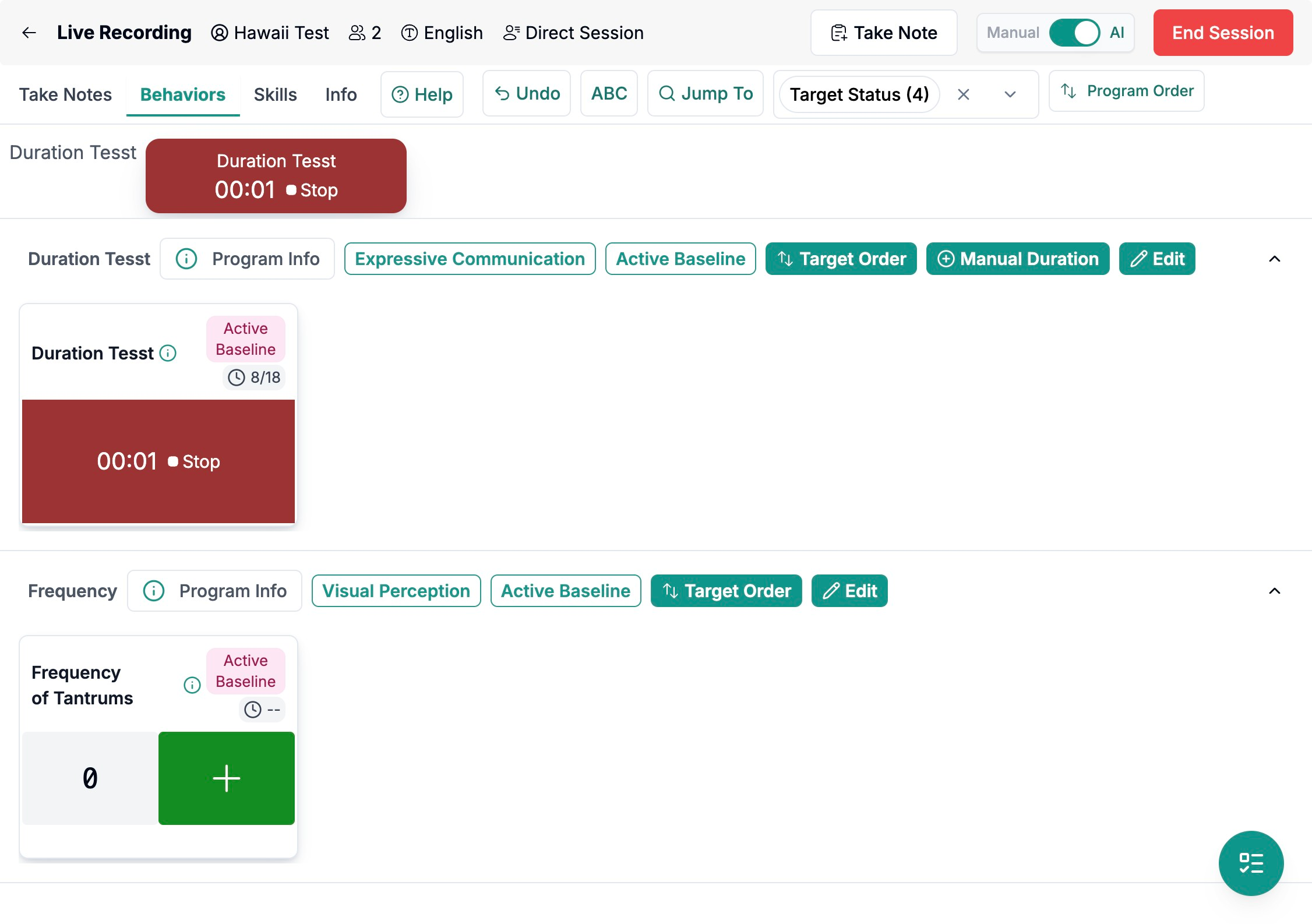
Duration-based
Measures: How long a behavior lasts.
How RBTs collect it: Start/stop a timer for each occurrence; records total or average duration.
Frequency-based
Measures: How many times a behavior occurs.
How RBTs collect it: Tap the counter each time the behavior happens during the session.
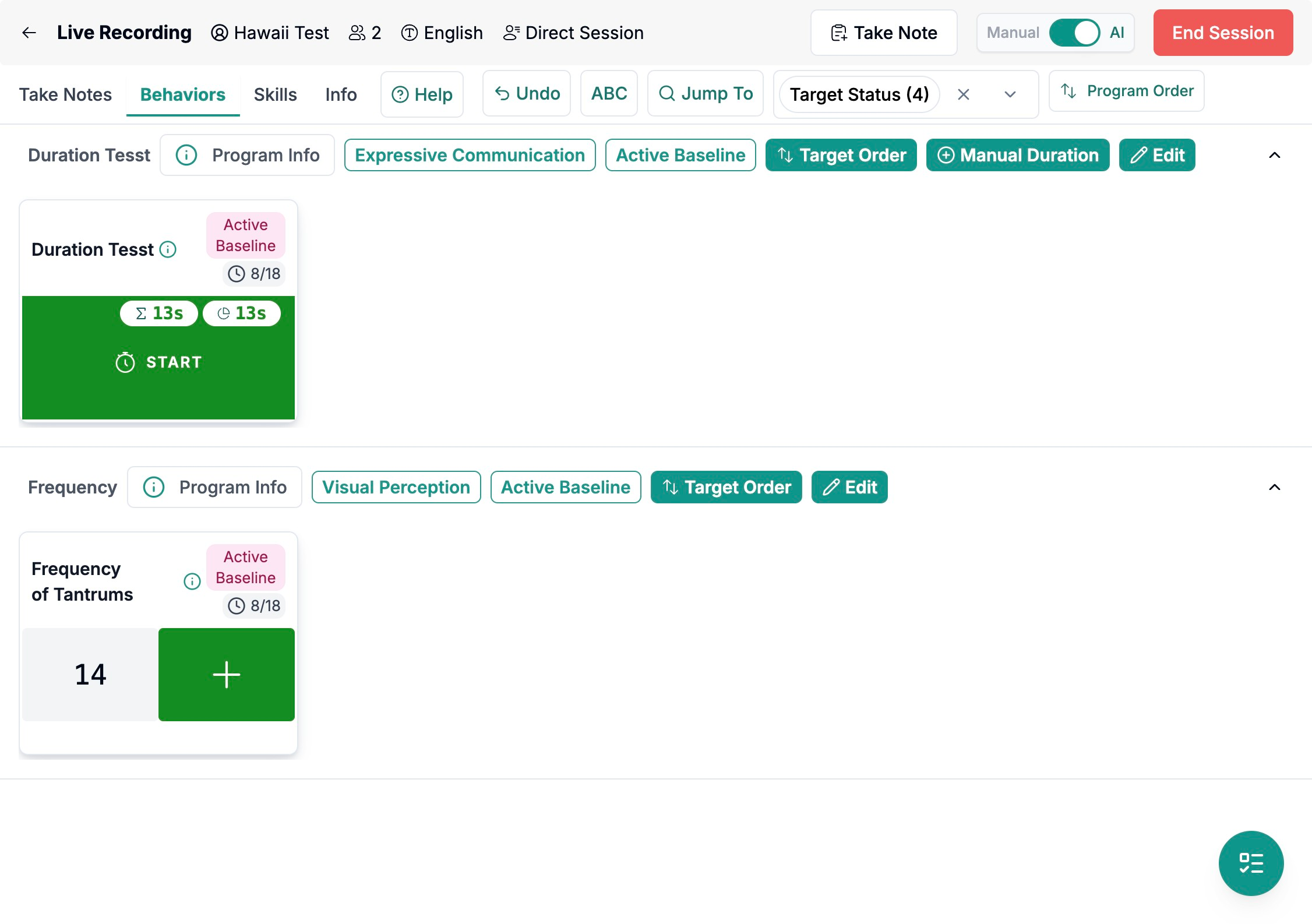
Trials without prompting
Measures: Percentage of trials the client responds to correctly/independently.
How RBTs collect it: Score each trial as correct or incorrect (e.g., + / –) across the set number of trials.
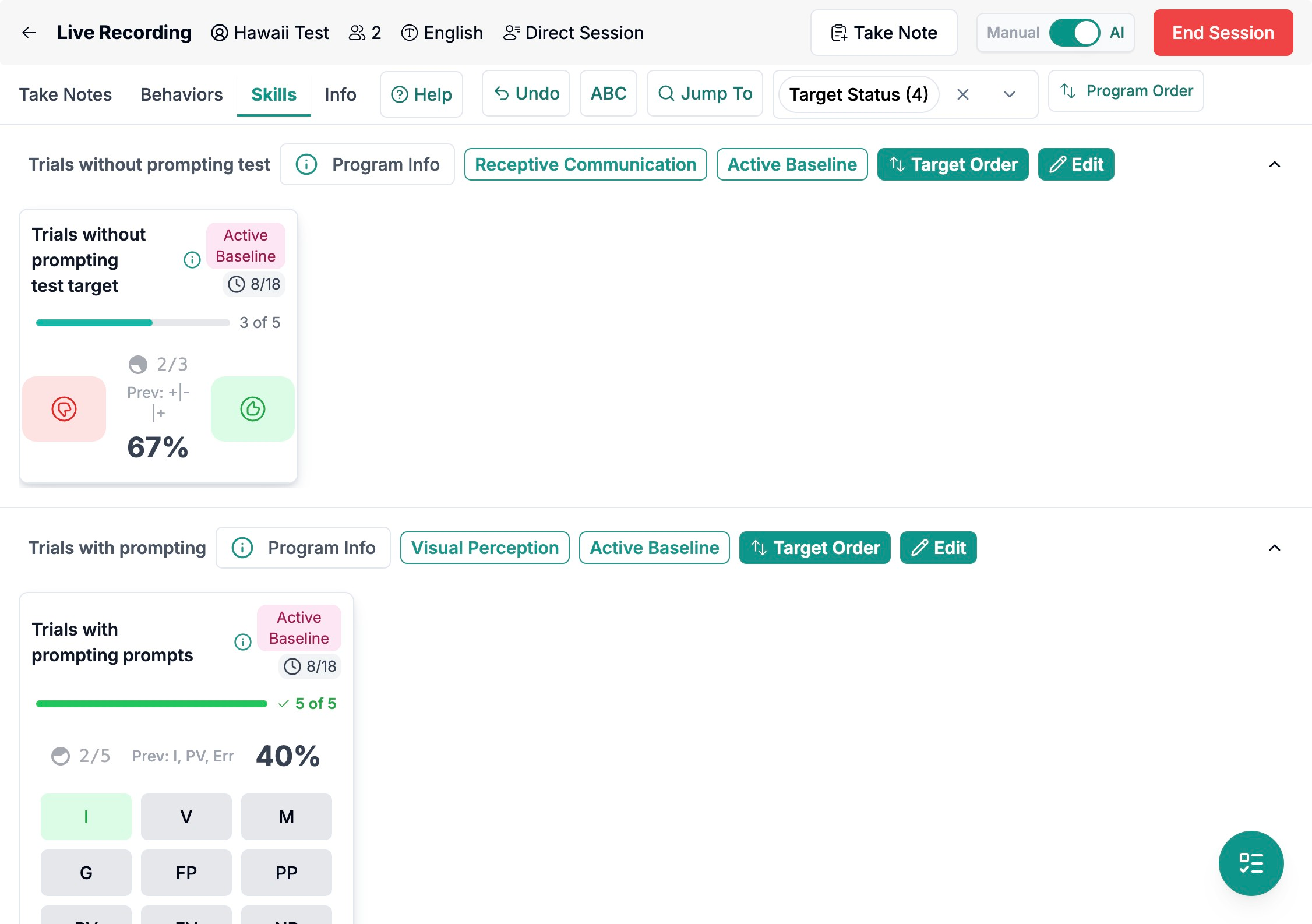
Trials with prompting (and Prompt Levels)
Measures: Client independence across trials by capturing the level of support needed.
How RBTs collect it: For each trial, select the prompt level used. Alpaca's prompt levels: I (Independent), V (Verbal), M (Model), G (Gestural), PP (Partial Physical), FP (Full Physical), PV (Partial Verbal), FV (Full Verbal), and NR (No Response). (Confirm this set/abbreviations against the app.) ^ See image above.
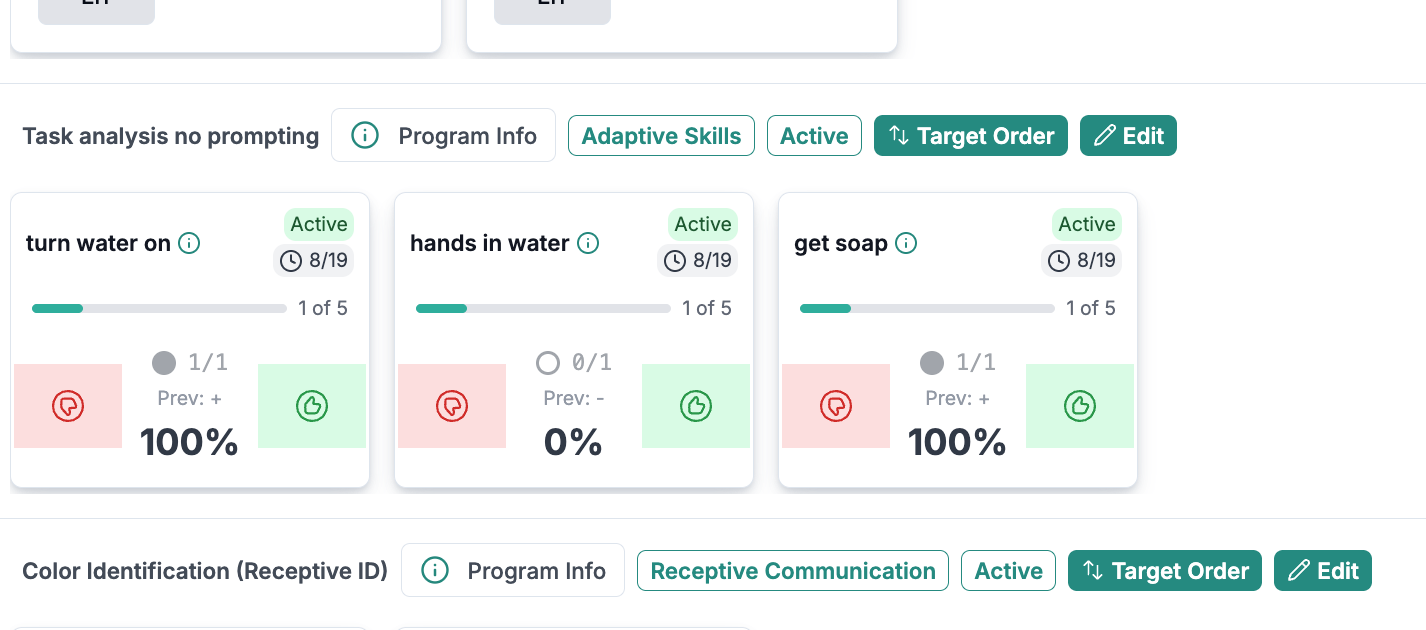
Task analysis without prompting
Measures: Percentage of steps in a chained skill completed independently.
How RBTs collect it: Score each step of the sequence as correct/incorrect as the client works through the task.
Task analysis with prompting
Measures: Client independence on each step of a chained skill.
How RBTs collect it: Select the prompt level used for each step of the sequence (same prompt levels as above).

Partial intervals
Measures: The percentage of intervals in which the behavior occurred at least once.
How RBTs collect it: Divide the session into set time intervals and mark yes if the behavior happened at any point during each interval.

Likert scale
Measures: A rating (e.g., 1–5) for intensity, quality, or another subjective measure.
How RBTs collect it: Select the rating value during or after the session.

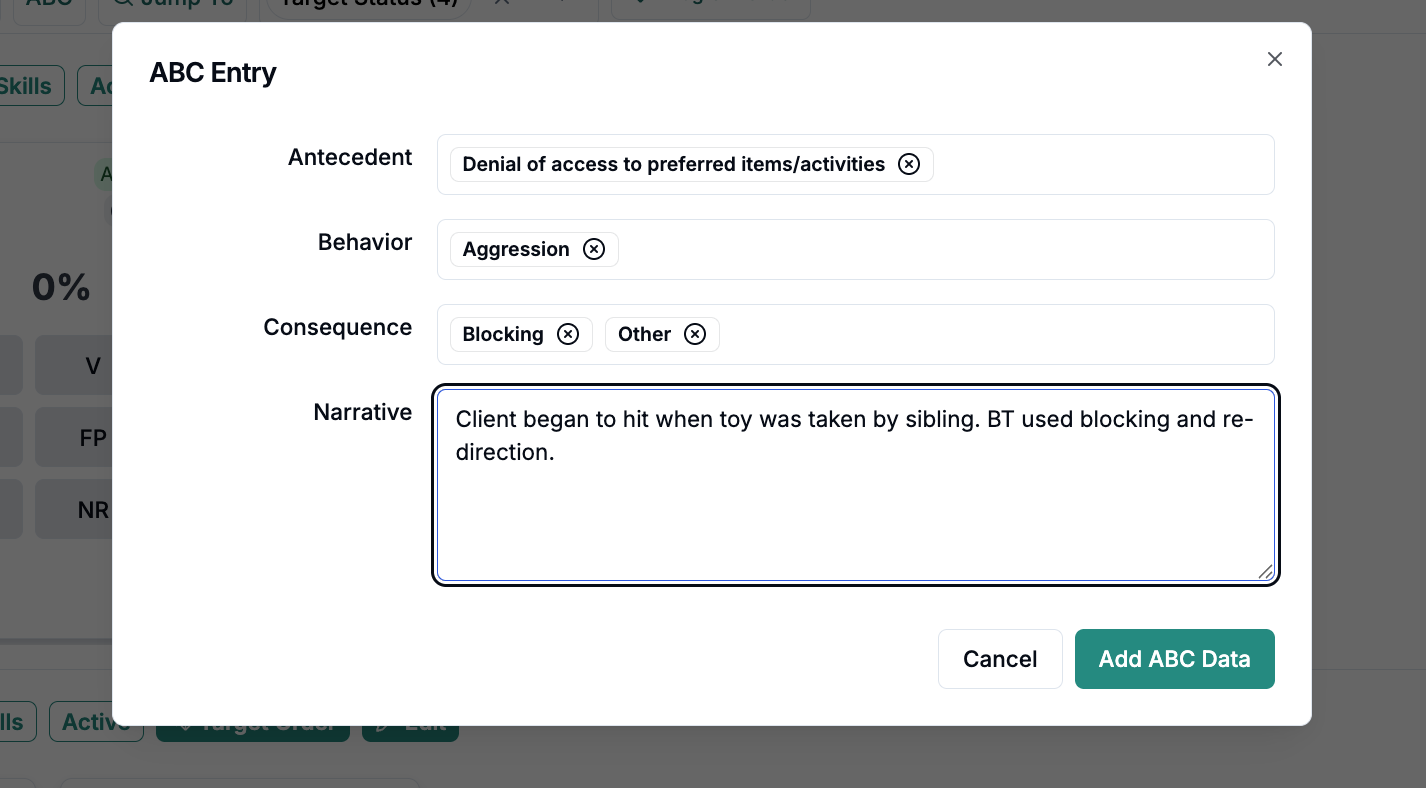
ABC
Measures: The context around a behavior — the Antecedent (what happened before), Behavior, and Consequence (what happened after).
How RBTs collect it: For each incident, log the antecedent, behavior, and consequence (via dropdowns/notes). This is descriptive data for analysis rather than a simple count on a graph.